
Cenfire’s silicon switch platform combines physical isolation, ultra-fast protection, and semiconductor-scale scalability for next-generation AI power systems.
AI Infrastructure Is Changing Power Delivery
AI data centers are undergoing a structural shift in power architecture.
Rack power is increasing. Distribution voltages are rising. Fault energy is accelerating.
The switch is no longer a passive component—it is becoming a system-level constraint.
Mechanical switches deliver true isolation and low conduction loss, but they are fundamentally constrained by moving mass and mechanical actuation physics. Semiconductor protection devices deliver speed and control, but introduce continuous loss, thermal burden, and incomplete isolation under fast transients.
Neither approach is designed for the scale, efficiency, and fault dynamics of next-generation AI infrastructure. The future of power distribution will be built from scalable silicon switching platforms.
Why Silicon Matters
Every major function in modern electronics has migrated onto silicon.
- Computing
- Memory
- Sensing
- Power management
- Switching has not
Cenfire’s silicon switch platform changes that.
Built on a silicon-based switching architecture, Cenfire brings semiconductor-grade precision, manufacturability, and scalability to one of the last remaining electromechanical functions in modern electronics.

Designed to Scale
Conventional switches are discrete devices.
Need more current? Build a bigger switch.
Need more voltage? Increase spacing and add complexity.
That model does not scale with AI infrastructure.
Cenfire takes a different approach.
The silicon switch platform is built from a scalable switching unit cell manufactured using semiconductor-compatible processes.
Current scales through parallel unit cells.
Voltage scales through architecture and configuration.
Not a larger switch. A scalable switching array.
This is the shift from mechanical scaling to silicon scaling.
The Switching Landscape for AI Data Centers
| Parameter | Mechanical Contactor | Solid-State Breaker | Traditional MEMS Switch | Cenfire silicon Switch |
| Physical Isolation | ✓ | X | ✓ | ✓ |
| Conduction Loss | Low | Higher | Low | Low |
| Turn-Off Speed | ms | ns–µs | µs–ms | <2us |
| Off-State Leakage | None | Present | None | None (true gap isolation) |
| Scalability | Limited | Moderate | Limited | Unit Cell Architecture |
| Spring Architecture | Metal | P-N junction | Metal Cantilever | 8-beam Si |
Mechanical systems dominate today’s AI power infrastructure because they provide true isolation and low conduction loss, but they are limited by mechanical inertia and wear mechanisms.
Solid-state systems provide speed and controllability, but at the cost of continuous losses and incomplete isolation under fast electrical transients.
Traditional MEMS improves size and response time, but remains constrained by single-point metal cantilever architectures that introduce fatigue, drift, and long-term mechanical variability.
Cenfire replaces this with an 8-beam Si architecture designed for repeatable, scalable switching behavior at semiconductor manufacturing precision.

Why AI Infrastructure Benefits
Power efficiency matters.
Protection speed matters.
System reliability matters.
AI data centers require all three simultaneously.
A physical switch remains the most efficient way to conduct current. No leakage. No continuous semiconductor loss. No standby power consumption.
At the same time, increasing power density is compressing fault timelines. Interruption speed is no longer a secondary parameter—it defines system-level fault energ
Time-Domain Advantage: Faster Switching Reduces Fault Energy
A key advantage of MEMS-based switching over mechanical relays is reduced fault energy exposure through faster interruption.
Fault energy scales with the duration the switch remains in a conducting state during a fault event.
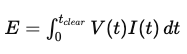
Mechanical relays operate on millisecond-scale timelines, meaning fault current continues to source energy into the system during mechanical travel and arc formation.
Cenfire’s silicon switch reduces clearing time into the sub-microsecond regime.
This compresses fault energy delivery and changes system-level behavior:
- Lower I²t stress across power paths
- Reduced arc formation energy
- Faster containment of fault propagation
- Reduced thermal stress on upstream conversion stages
Frequency-Domain Advantage: Low Capacitance Eliminates OFF-State Coupling
A second advantage over CMOS and solid-state relays is OFF-state isolation during fast electrical transients.
Even in the OFF state, semiconductor switches exhibit capacitive coupling between terminals:

In fast AI power systems, high dv/dt conditions during switching and faults generate transient current flow through device and package capacitances.
This creates a non-ideal OFF state where energy and noise can still propagate across the switch.
Cenfire’s silicon switch architecture replaces semiconductor junctions with a physical air/vacuum gap, reducing capacitance by orders of magnitude.
The result is:
- Near-elimination of transient coupling during fast voltage events
- True OFF-state isolation independent of switching speed
- Reduced EMI propagation into downstream power and control systems
High Restoring Force. Low Moving Mass. No Metal Spring Fatigue
The performance of a switch is defined by its mechanical structure.
Traditional MEMS switches rely on metal cantilevers or thin-film spring structures. As performance requirements increase, these architectures face a fundamental tradeoff between contact force, switching speed, actuation energy, and long-term stability.
The spring becomes the limitation.
Cenfire takes a different approach.
The silicon switch platform uses a proprietary eight-beam silicon spring architecture engineered using semiconductor manufacturing processes.
By distributing mechanical load across multiple silicon beams, the structure achieves high restoring force while maintaining low moving mass. This enables rapid contact release, fast opening dynamics, and stable operation over extreme cycle counts.
High restoring force accelerates separation.
Low moving mass enables speed.
Silicon stability maintains consistency over life.
Unlike metal spring structures, the silicon beam eliminates fatigue, creep, and stress-relaxation mechanisms that can degrade long-term performance.
The switching behavior remains stable across the lifetime of the device.
Physical Isolation Matters
Most fast protection devices rely on semiconductor junctions to block voltage.
Even in the off-state, they remain physically connected through:
- Junction leakage
- Body diode conduction paths
- Parasitic capacitance
- Electric field stress across semiconductor structures
Cenfire creates a true physical isolation gap.
No junction.
No leakage path.
No off-state power dissipation.
No continuous semiconductor blocking stress.
This becomes increasingly important as AI power systems scale in voltage, current, and fault energy.
Built for the Next Generation of Power Systems
Future AI infrastructure requires a different class of switch.
A switch that combines:
- Physical isolation
- Zero-leakage off-state performance
- Fully metallic current conduction
- Ultra-fast operation (<2us)
- Semiconductor-scale scalability
- Long-term mechanical stability
Cenfire’s silicon switch platform was designed to deliver exactly this combination.
The result is a switching technology purpose-built for high-density AI power systems where efficiency, speed, and reliability must coexist without compromise.
The future of power distribution will not be built from larger switches, nor from fragmented small-scale solutions.
It will be built from scalable silicon switching platforms.