
Low Loss DC Circuit Protection for High Voltage Power Systems.
Enable fast, intelligent DC protection without carrying normal operating current through a lossy power semiconductor.
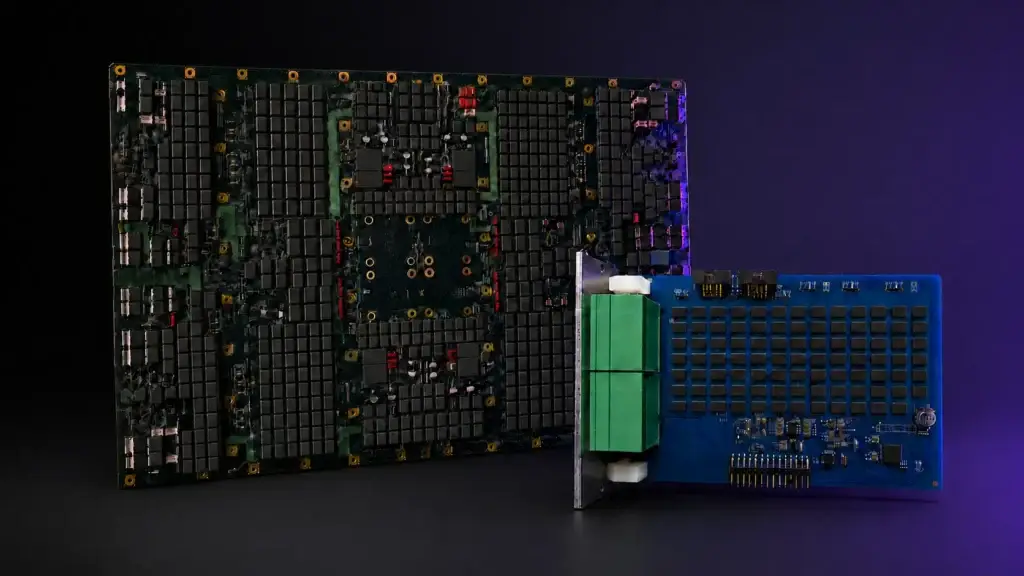
Cenfire is developing a MEMS-based circuit protection platform for next-generation DC power architectures, combining metallic low loss conduction, integrated current sensing, and active galvanic isolation.
As power systems move toward higher voltage DC distribution, protection requirements are changing. AI data centers, battery systems, industrial automation, and electrified infrastructure need protection that is fast, selective, compact, and efficient.
Traditional mechanical breakers offer low conduction loss, but they are too slow for many high-energy DC fault conditions. Conventional solid-state breakers act quickly, but they carry current through power semiconductors during normal operation, creating continuous heat.
Cenfire targets the gap between these two approaches: solid-state speed with a metallic low loss conduction path.
At high current, even small conduction losses become a thermal problem. Cenfire’s MEMS architecture is designed to reduce continuous breaker loss by moving normal operating current through metallic contacts.
Lower conduction loss makes it practical to place protection closer to the load, including rack inputs, power shelves, converter modules, battery segments, and service disconnect points.
Fast, selective DC protection can isolate local failures before they propagate across the power architecture.
By targeting low hundreds of watts instead of kilowatt-class breaker heat, Cenfire can support simpler thermal paths and reduce dependence on liquid-cooled switchgear.
Cenfire’s MEMS platform can be tiled from module-level current protection toward larger parallel arrays for higher-current systems.
Cenfire is developing the platform around the requirements of high voltage DC power systems.
Conventional solid-state breakers solve speed by keeping a semiconductor in the current path at all times. That creates continuous conduction loss.
Cenfire’s approach is different.
The normal current path is metallic. The active protection system is used when needed. This allows Cenfire to target fast DC protection without paying the continuous semiconductor loss penalty during normal operation.
Start with lower-current protection points such as converter inputs, battery segments, and service disconnects.
Scale parallel MEMS arrays into higher-current DC protection modules.
Use wafer-scale MEMS tiling to target kiloamp-class protection with low conduction loss.
Evaluate voltage, current, trip time, isolation, and thermal requirements for your DC protection node.
Explore distributed protection strategies that reduce fault propagation and improve serviceability.
Assess the cost of breaker loss, switchgear cooling, infrastructure complexity, and deployable power.