
AI COMPUTE POWER DELIVERY
Put Fast, Local Power Control Closer to the Processor.
As AI processors consume more power and power conversion moves closer to the compute, the ability to control where, when, and how power is delivered becomes increasingly important.
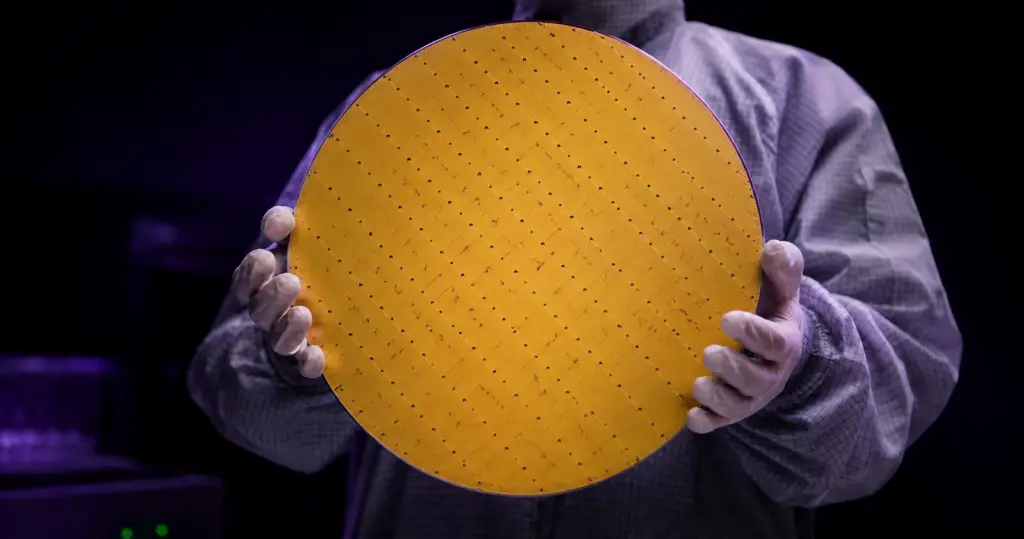
AI accelerators are pushing unprecedented current into increasingly dense packages. Moving voltage conversion closer to the processor reduces distribution losses, but it also changes the requirements of the power-delivery network.
Large and rapidly changing compute workloads can produce significant load steps. At the same time, conventional architectures provide limited ability to physically disconnect or independently control portions of the power network once power leaves the regulator.
Cenfire adds a new hardware control layer between the power-conversion system and the load.
Compact MEMS switches can be distributed throughout the power architecture to selectively connect and disconnect power domains under digital control.
This enables engineers to:
Use dense, digitally controlled MEMS switching to introduce physical power-path control closer to the processor.
Partition the power architecture into independently controlled domains instead of permanently connecting every load to the power-distribution network. Connect power only where it is needed and physically isolate inactive domains when they are not.
Place switching close to the load to control which capacitance, compute domains, and downstream circuitry participate in a system-level transient. Cenfire complements the voltage regulator by adding another control mechanism for managing power demand rather than asking the regulator alone to absorb every large load transition.
During normal conduction, current flows through a metallic MEMS contact rather than through a semiconductor junction. This architecture is designed to enable fast electronic control without requiring the continuous conduction loss associated with conventional solid-state isolation switches.
Use staged connection and disconnection of power domains to control how large loads are presented to the upstream power-delivery network. Rather than treating the processor as one continuously connected electrical load, power paths can be managed individually at the hardware level.
An open Cenfire MEMS contact creates a physical air gap. This provides galvanic isolation between disconnected power domains rather than relying solely on semiconductor leakage or logic-level power gating.
Silicon MEMS technology enables switching to move significantly closer to the processor than traditional electromechanical switching architectures. Distributed control can be implemented at the board, module, package, or power-conversion level depending on the application.
Traditional switching solutions consume valuable board or module footprint and limit how close physical power control can get to the compute.
Cenfire changes that.
AI accelerators are consuming more power while package real estate becomes increasingly constrained by HBM, high-speed I/O, power delivery, and thermal infrastructure.
Our silicon MEMS architecture is CMOS compatible, creating a path to integrate physical power switching progressively closer to the GPU or AI accelerator, from the board, to the module, to the package, and ultimately alongside the silicon itself.
This enables a new level of vertical power-control integration:
Add distributed power-domain control without large electromechanical components
Integrate physical isolation directly into increasingly dense compute architectures
Create a path toward power switching and compute being designed as part of the same silicon-level architecture
Move switching closer to the processor and reduce power-path distance
By eliminating the footprint limitations of conventional switching, Cenfire gives GPU and AI hardware architects another degree of freedom when designing increasingly power-dense compute systems.
More compute. More memory. More power control. Without giving up critical footprint.
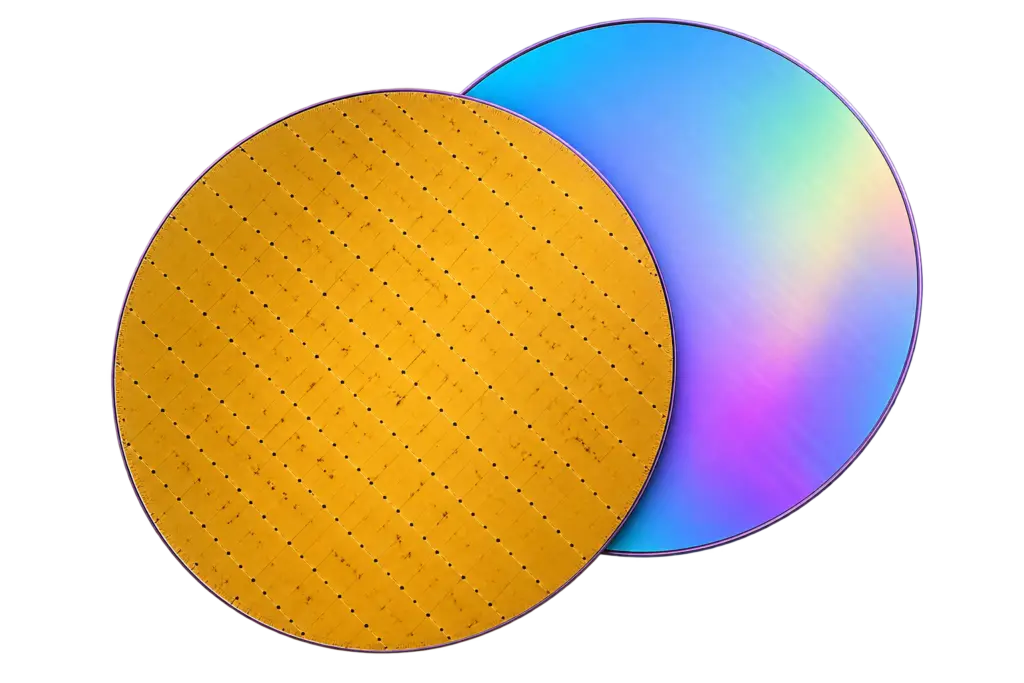
Cenfire’s silicon MEMS platform combines the electrical properties of a mechanical contact with the density and digital control expected from semiconductor technology.
Carry current through a physical metal-to-metal contact instead of a continuously conducting semiconductor channel.
Opening the MEMS contact creates a physical air gap between the source and load.
Rapid mechanical actuation enables power-path changes on microsecond timescales, providing a control layer between slow electromechanical switching and semiconductor-only architectures.
MEMS fabrication enables dense switching structures that can be located much closer to high-power compute than conventional relays or contactors.
Integrate switching decisions with existing power-management, telemetry, sequencing, and system-control logic.
Parallel MEMS structures can be developed around the voltage, current, resistance, transient, and footprint requirements of the target power-delivery architecture.
Add Another Control Variable
Evaluate how distributed MEMS switching could work alongside your VRMs, point-of-load converters, capacitors, telemetry, and control loops to manage power-domain connectivity and large system-level load transitions.
Bring Physical Power Control Closer to Compute
Explore architectures where processor regions or subsystem loads can be independently connected, isolated, sequenced, or protected instead of treating the entire compute system as one permanently connected load.
Explore a New Power-Delivery Building Block
As AI power density increases, power conversion alone may not provide every control mechanism required by future compute architectures. Cenfire provides an additional hardware layer for controlling how power reaches the processor.